
OUR HISTORY
History of the industry
The rare-earth magnetics industry has experienced significant transformations over the past few decades, primarily driven by geopolitical factors and market dynamics. Several key events have contributed to the current vulnerability of the supply chain for rare earth elements, highlighting the strategic importance of these materials in high-tech industries and clean energy technologies.
1990: China designates rare earth elements as protected and strategic materials, requiring Chinese ownership or Sino-foreign joint ventures for all rare-earth businesses.
1995: Magnequench is acquired from General Motors by the Sextant Group (a front company for Chinese firms), marking a pivotal step in consolidating rare-earth supply chains in China.
1998: Closure of the Mountain Pass, CA, rare earth separation plant signifies a downturn in U.S. production capabilities, leading to a trend of American facilities moving operations to China.
1999: China begins imposing restrictive export quotas on rare-earth elements, further influencing global supply chain dynamics.
Early 2000s: Companies like GA Powders and Magnequench shift production to China, culminating in the closure of the last U.S. NdFeB magnet facility in Valparaiso, IN, by 2006.
2010: China imposes duties and significantly decreases export quotas, resulting in a de facto embargo on rare earth exports to Japan and revealing vulnerabilities in global supply chains.
2011-Present: Geopolitical tensions rise as China expands its export quotas and initiates a rare earth stockpile, consolidating control over the market, while the U.S., Japan, and the EU express concerns through the World Trade Organization.
These key events outline a trajectory that has led to the persistent challenges facing the rare-earth supply chain today. The growing demand for clean energy technologies and electric vehicles has intensified these vulnerabilities, underscoring the need for secure, diversified sourcing strategies. Addressing these challenges is essential for economic stability and national security, underscoring the crucial role of rare earths in maintaining technological leadership and fostering sustainable innovation.
USSMA History

The U.S. Magnetic Materials Association (USMMA) was formed to address the growing reliance on foreign sources of rare-earth materials essential to various technology sectors, including renewable energy and defense. The organization has been instrumental in advocating for a resilient and competitive supply chain for magnetic materials, which are crucial for applications such as satellites, precision-guided munitions, wind turbines, hybrid-electric batteries, and computer hard drives.
Since its inception, USMMA has achieved significant milestones, including participation in the Department of Defense's rare-earth inventory assessments, briefings for members of Congress, and contributions to legislative efforts to transform the rare-earth supply chain. With a mission focused on rebuilding and securing the supply chain for these vital materials, the USMMA aims to enhance the nation’s independence from foreign resources and support the growth of domestic industries reliant on magnetic materials.
Industry Statistics
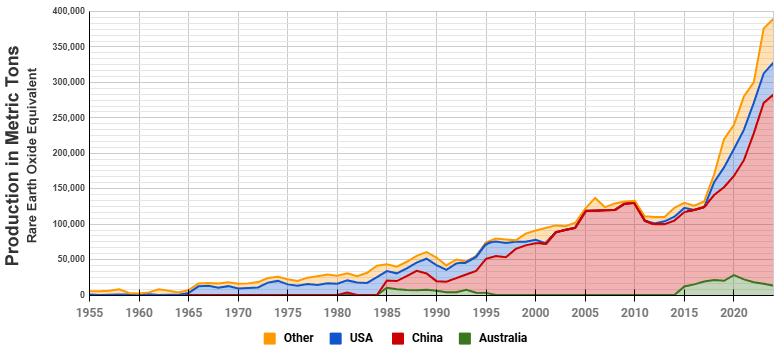
Source: Geology.com, "REE: Rare Earth Elements and their Uses," https://geology.com/articles/rare-earth-elements/. The data for this graph are from the U.S. Geological Survey (USGS).
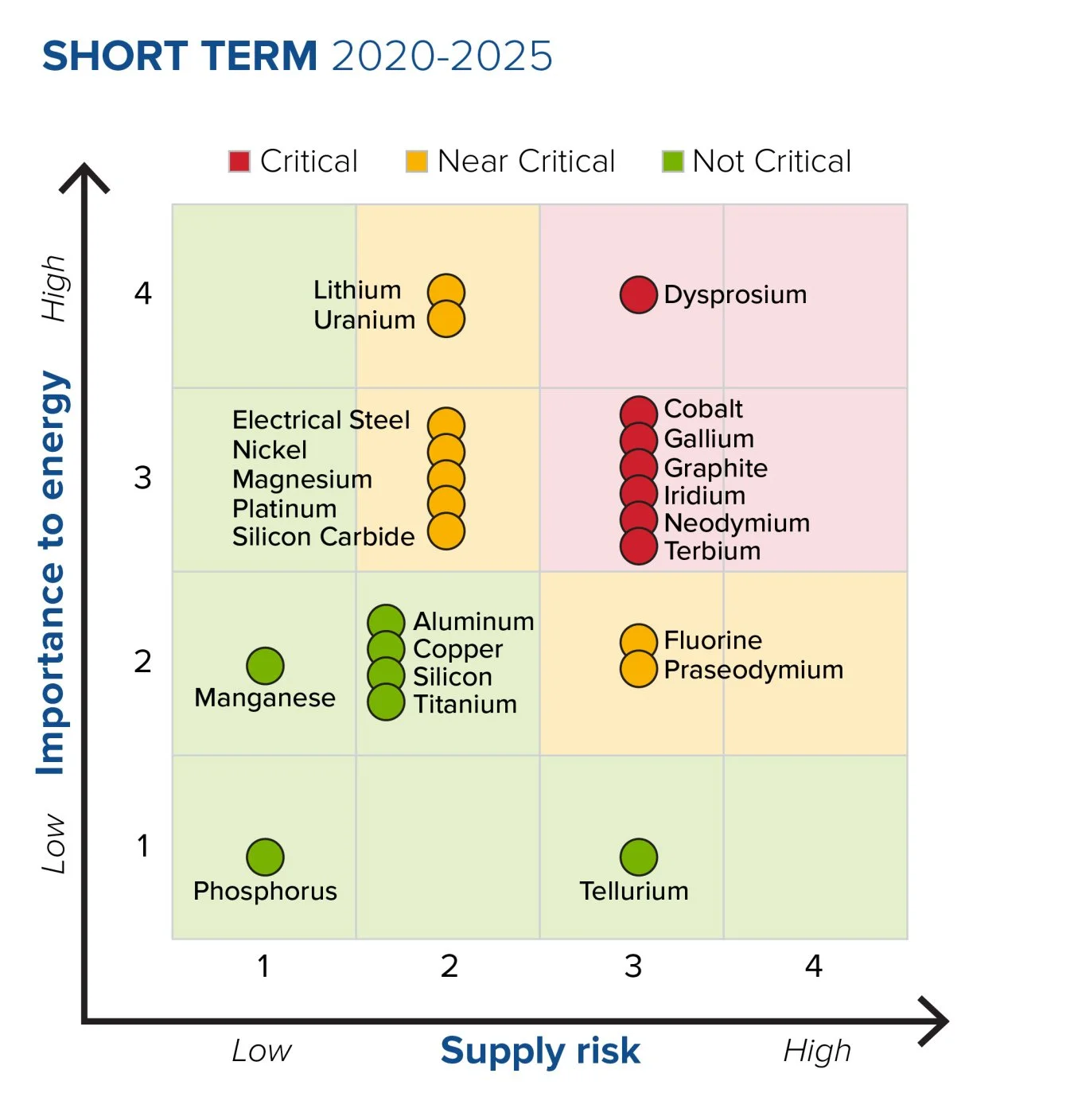
Source: DOE, Critical Materials Assessment, July 2023, https://www.energy.gov/sites/default/files/2023-07/doe-critical-material-assessment_07312023.pdf
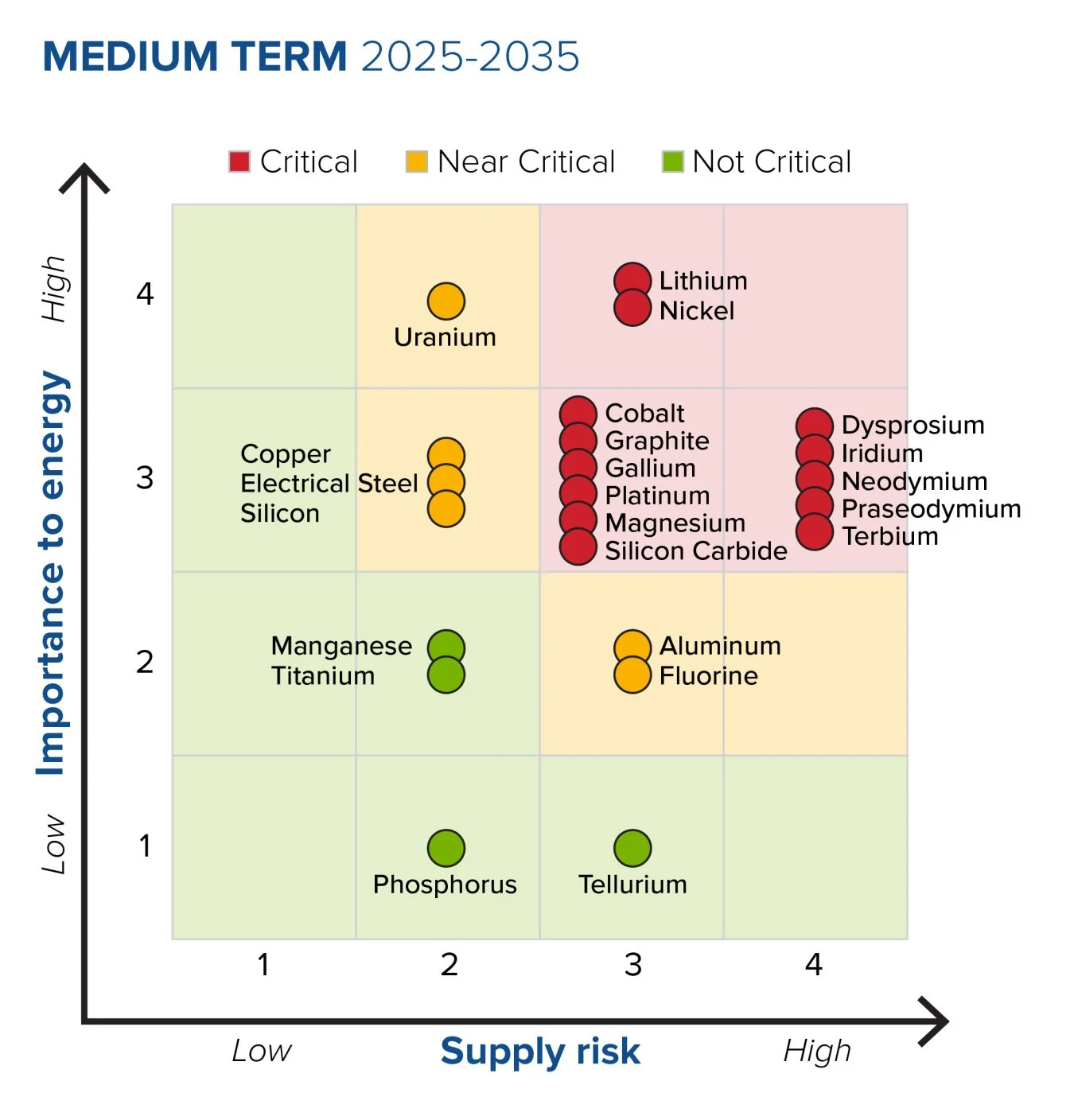
Source: DOE, Critical Materials Assessment, July 2023, https://www.energy.gov/sites/default/files/2023-07/doe-critical-material-assessment_07312023.pdf